Thoughts & Musings

A writer's journey through words and ideas

Welcome to my personal corner of the internet. Unlike my polished articles, this is where I share raw thoughts, creative experiments, and the occasional revelation that comes at 2 AM. Expect honesty, imperfection, and hopefully a bit of inspiration.

Filter by category:

The Ritual of First Drafts

Messy desk with coffee and notebooks

There's something magical about the chaos of a first draft. This morning, I found myself staring at a blank document at 5:30 AM, coffee in hand, listening to ambient piano music that somehow makes the words flow better.

The first draft is where I give myself permission to write badly. To put down words that might make me cringe later. But there's a strange freedom in that permission—in knowing that nobody will see this version but me.

My ritual has evolved over the years:

  • Wake up before the sun (and before my inner critic)
  • Make coffee strong enough to stand a spoon in it
  • Set a timer for 30 minutes of uninterrupted writing
  • Write without looking back until the timer goes off

What's your first draft ritual? Do you embrace the mess or try to perfect as you go?
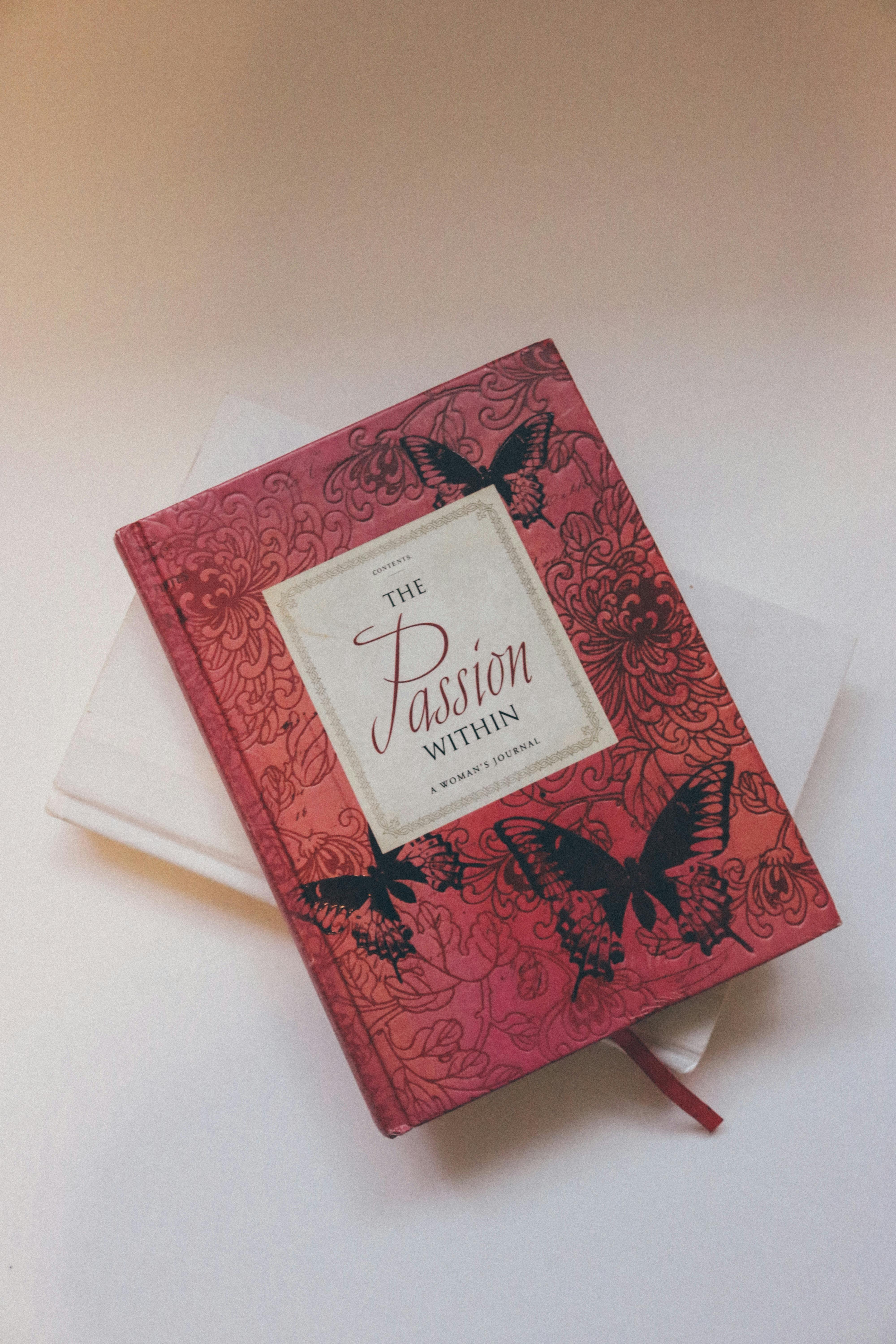
On Reading "Bird by Bird" for the Fifth Time

Open book with coffee

Some books you read once and move on. Others become old friends you visit again and again. Anne Lamott's "Bird by Bird" falls firmly in the latter category for me.

My copy is dog-eared, highlighted, and filled with margin notes that track my evolution as a writer. The first time I read it, I was desperate for technical advice. The fifth time, I found myself nodding along like I was chatting with an old mentor who knows exactly when I need tough love versus gentle encouragement.

"Perfectionism is the voice of the oppressor, the enemy of the people. It will keep you cramped and insane your whole life."

This quote hits differently now than it did years ago. It's no longer just good advice—it's a mantra that saves me daily from the paralysis of trying to get everything right the first time.

What book do you return to again and again? What wisdom reveals itself differently each time?

A Week of Writing in Different Voices

Multiple masks on dark background

Last week, I challenged myself to write in a completely different voice each day. Not just different tones or styles, but fundamentally different personas—as if I were method acting on the page.

Monday: A no-nonsense investigative journalist
Tuesday: A whimsical children's book author
Wednesday: A technical documentation writer
Thursday: A Victorian-era letter writer
Friday: A snarky food critic
Saturday: A self-help guru
Sunday: Finally, myself again

The most surprising discovery? How much of "me" leaked into each voice, despite my best efforts. And how Sunday's writing—supposedly back to my natural voice—felt somehow different, more expansive, as if I'd brought back souvenirs from each persona.

Identity is fluid, even on the page. And sometimes the best way to find your voice is to deliberately try on others.

Finding Serenity in Harshil Valley

Harshil Valley with river Bhagirathi and pine trees

There's something about the Himalayas that calls to the soul. My recent journey to Harshil Valley in Uttarakhand answered that call in ways I couldn't have imagined.

Nestled between towering pine forests and the crystalline Bhagirathi River, Harshil Valley feels like a place time forgot. The air there carries a sweetness—a mixture of pine resin, wildflowers, and the distant chill of snowcaps.

What struck me most was the simplicity of life. The locals, with their warm smiles and even warmer chai, move with the rhythms of nature. Their apple orchards paint the valley with delicate white blossoms in spring and heavy red fruit in autumn.

I spent mornings by the river, watching the water rush over smooth stones, carrying stories from the glaciers above. The evenings were for sitting in silence as the alpenglow painted the distant peaks in shades of pink and gold that no camera could truly capture.

Travel isn't always about checking places off a list—sometimes it's about finding places that check something inside you. Harshil Valley was that place for me.

The Climb to Tungnath: When Journey Becomes Pilgrimage

Tungnath Temple in the Himalayas with snow-capped mountains

At 12,000 feet above sea level, breathing comes hard, but perspective comes easy. The trek to Tungnath Temple—the highest Shiva temple in the world—began as a challenge and ended as something closer to revelation.

The stone-paved path winds through rhododendron forests that explode with crimson flowers in spring. Each step upward feels like moving through layers of existence: first through misty forests, then alpine meadows dotted with grazing bharal (blue sheep), and finally into the realm of naked rock and thin air.

The temple itself isn't grand by conventional standards—a modest stone structure weathered by centuries of mountain winters. But standing there, with clouds swirling around you and the Himalayan pantheon spread in every direction, grandeur takes on a different meaning.

A local sadhu with sun-leathered skin told me, "Mountains don't make you feel small; they make you feel part of something immense." His words stayed with me as I watched the sunset paint Chaukhamba and Nanda Devi peaks in golden light.

Some travels change your photos, while others change your perspective. Tungnath changed both.

The Silent Struggle: My Dance with Burnout

Person dealing with stress and burnout

Six months ago, I couldn't admit it—even to myself. The signs were all there: chronic exhaustion that sleep couldn't touch, a mind that simultaneously raced and stood still, and the growing distance between myself and the work I once loved.

Burnout doesn't announce itself with fanfare. It creeps in through the back door of your life, wearing the disguise of ambition, persistence, or just "having a rough week." By the time you recognize the intruder, it's already rearranged your furniture.

My breaking point came during a routine client call when I realized I had been staring at my notes for five minutes without comprehending a single word. My mind had gone on strike—a worker's revolt against impossible conditions.

The journey back has been anything but linear:

  • Learning to say "no" without following it with an apology
  • Setting boundaries around my time that I defend as fiercely as my work
  • Detaching my self-worth from my productivity
  • Rediscovering joy in small creative acts that have no deliverable

Recovery isn't about "getting back" to where you were. It's about building something new from the ashes of what burned out. Something more sustainable, more human, and ultimately, more you.

Words Found Me When I Wasn't Looking

Person writing in journal with coffee

I never intended to become a writer. Growing up, I was the kid who groaned at essay assignments and tried to negotiate word counts down with teachers. Writing was something that happened to other people—those mysterious souls who seemed to know what they wanted to say before they said it.

Then came college, with its late-night conversations that spilled into dawn, and suddenly I had things to say—too many things to keep bottled inside. I started a journal as a pressure valve, a private place where thoughts could exist without judgment.

Those private scribblings became blog posts. Blog posts became freelance articles. And somehow, when I wasn't paying attention, writing transformed from something I did into something I am.

"We write to taste life twice, in the moment and in retrospect." – Anaïs Nin

This quote captured exactly what I had stumbled into—the magic of living experiences once, then again through words. The way writing doesn't just record life, but somehow deepens it.

Now, after years of professional writing, I've learned that the most powerful words still come from that same place—that quiet voice that first whispered onto journal pages when no one else was listening.

A Writer's Unexpected Journey into Machine Learning

Digital visualization representing machine learning

It started with a simple question: "Could a machine learn to write like me?" This innocent curiosity led me down a rabbit hole of linear algebra, Python tutorials, and late nights staring at error messages with increasingly creative expletives.

As someone whose relationship with mathematics has been tenuous at best (more on that in another post), the world of machine learning initially seemed as accessible as quantum physics. But what I lacked in mathematical intuition, I made up for in linguistic patterns—and it turns out, that's a surprisingly transferable skill.

My first successful model was laughably simple—a basic Markov chain that could generate text with a passing resemblance to my blog posts. I remember watching it produce its first coherent sentence, feeling like I'd witnessed a magic trick I'd somehow performed myself.

From there, the learning curve steepened:

  • Diving into neural networks and the mysterious "black box" of deep learning
  • Experimenting with GPT models and fine-tuning them on my own writing
  • Discovering the ethical questions that arise when machines can mimic human creativity

What began as curiosity has evolved into a genuine passion that bridges my writing world with the frontier of technology. These seemingly disparate disciplines—the ancient art of storytelling and the cutting edge of artificial intelligence—have more in common than I ever imagined.

From Zero to Hero: My Mathematical Redemption Story

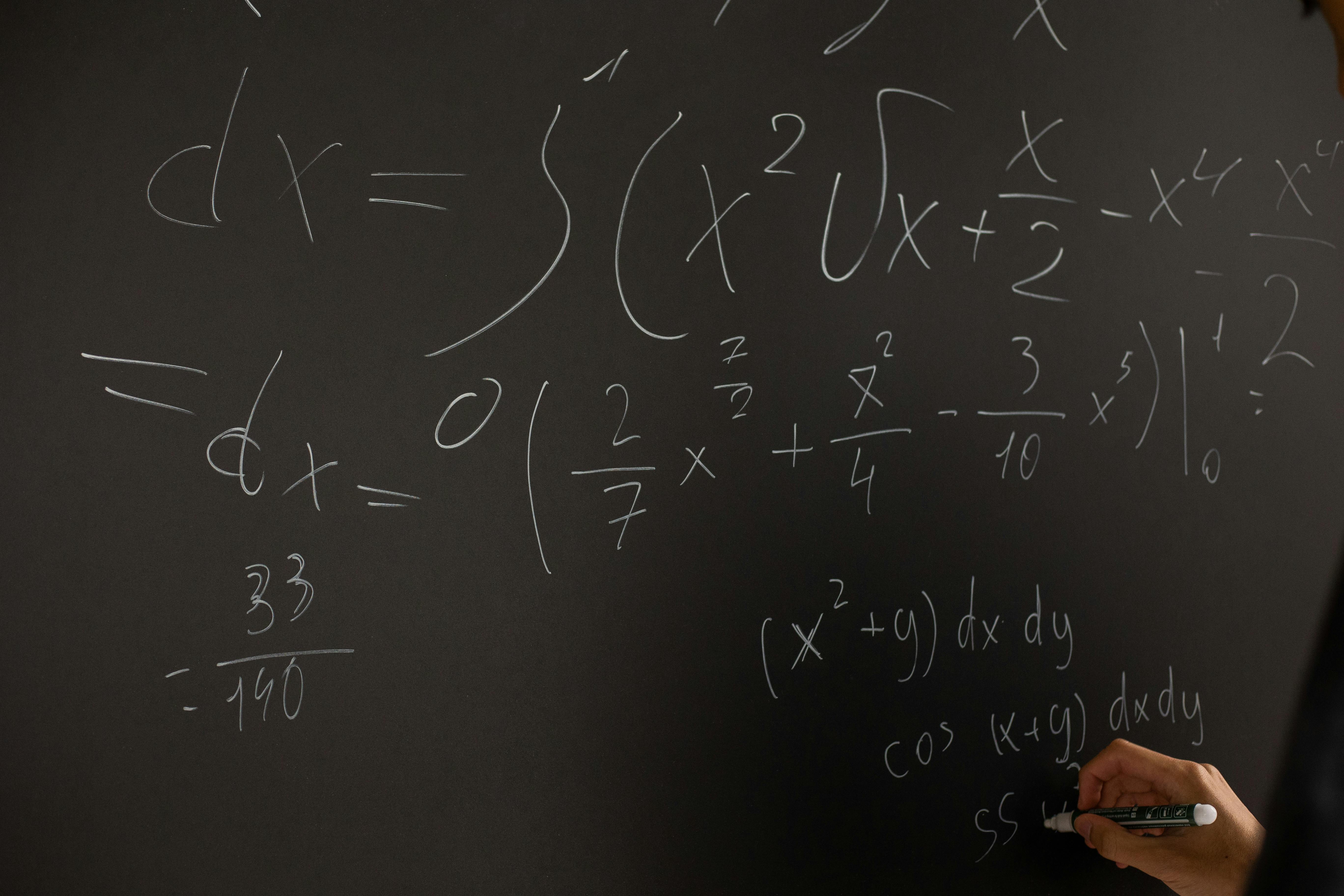
Mathematics equations and formulas on blackboard

The red "0/100" at the top of my exam paper might as well have been written in neon. It was my second consecutive zero in the advanced calculus course—a fact that my professor emphasized wasn't just a failure but something of a statistical anomaly.

"You've achieved perfect imperfection," he said, not unkindly. "That takes its own kind of talent."

Mathematics had always been my nemesis. Numbers seemed to rearrange themselves maliciously when I looked at them, and formulas evaporated from my memory the moment I entered an exam room. My relationship with math was less about understanding and more about survival.

After that second zero, something shifted. Not an epiphany or a sudden gift for calculation, but a quiet decision that this would not be my story. I didn't need to become a mathematician—I just needed to prove to myself that no subject was beyond my grasp if approached differently.

What followed was a three-month odyssey:

  • Finding a tutor who specialized in math anxiety rather than just math
  • Discovering that I learn visually—translating abstract equations into concrete diagrams
  • Breaking problems into tiny steps instead of trying to see the entire solution at once
  • Practicing at odd hours when my brain was less likely to panic

The final exam score of 31/50 (equivalent to 72/100) wasn't just a passing grade—it was evidence that our greatest limitations are often self-imposed. Sometimes our deepest fears hold the seeds of our most meaningful growth.

"It's not that I'm so smart, it's just that I stay with problems longer." – Albert Einstein